
Kaskor ASR
PrototypeKhmer speech-to-text on a fine-tuned Whisper-small — 3.74% CER on a speaker-dependent validation split (self-reported) — public code, released weights, and an installable CLI.

Software engineering & applied-ML student · Phnom Penh, Cambodia
I build and ship software — web systems, decision engines, bilingual education and agritech tools — in TypeScript and Python, and fine-tune Khmer speech models when a product needs one, with honest metrics and an evidence label on every claim.
I build software end to end: web systems, auditable decision tools for smallholder agriculture, and bilingual education tooling — and I add the applied-ML layer when a product needs one, like Khmer speech recognition where public data is scarce. The work stays grounded in field research with real farmers and in the business questions these systems ship into.
Dual-degree student — Computer Science at Fort Hays State and IT Management at AUPP — and national runner-up in mathematics, 2025. Learning to work as an AI-native developer, and building at CHNAI LAB, a six-member student studio in Phnom Penh, where I work most closely with one teammate.
Actively looking for a software engineering internship — full-stack, backend, or data and ML tooling — remote or Phnom Penh.
Khmer speech-to-text on a fine-tuned Whisper-small — 3.74% CER on a speaker-dependent validation split (self-reported) — public code, released weights, and an installable CLI.
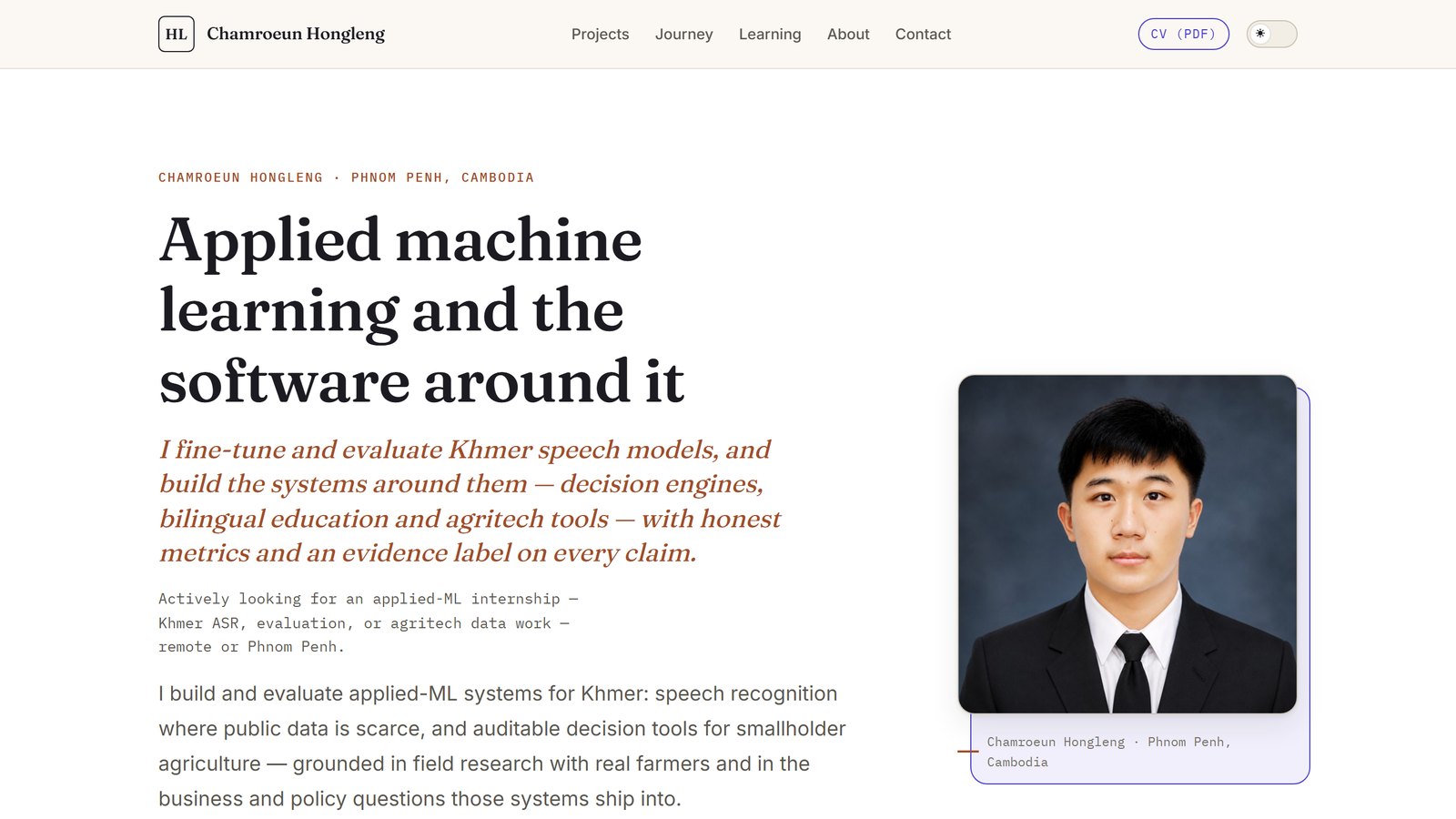
This site: a portfolio where every claim carries an evidence label, and the build refuses to publish work that is not yet honest.
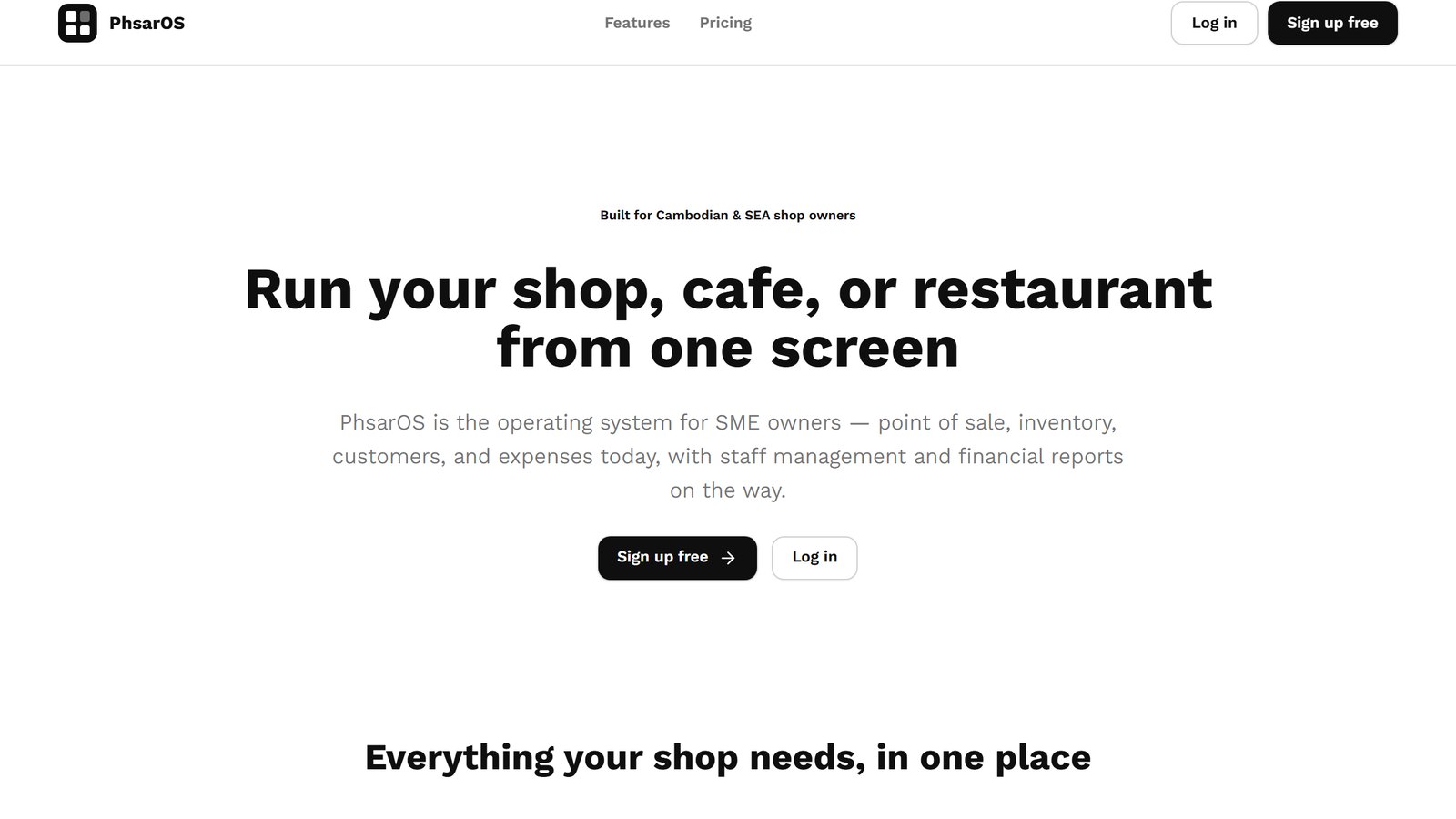
An operations platform for small Cambodian shops, cafés, and restaurants: point of sale, inventory, customers, and expenses on one screen.
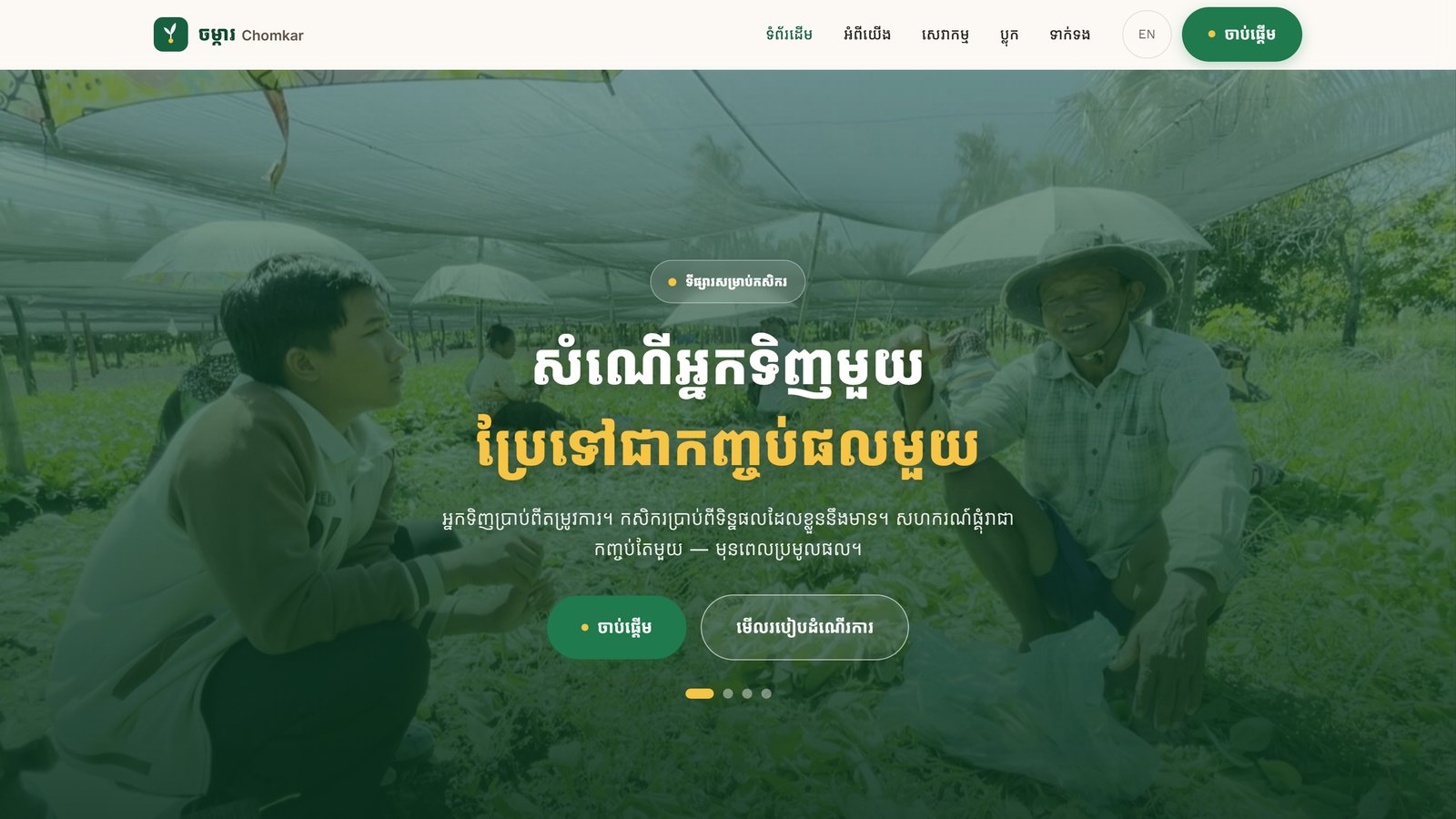
A buyer-first coordination concept: one recurring buyer order assembled from documented smallholder commitments before harvest.
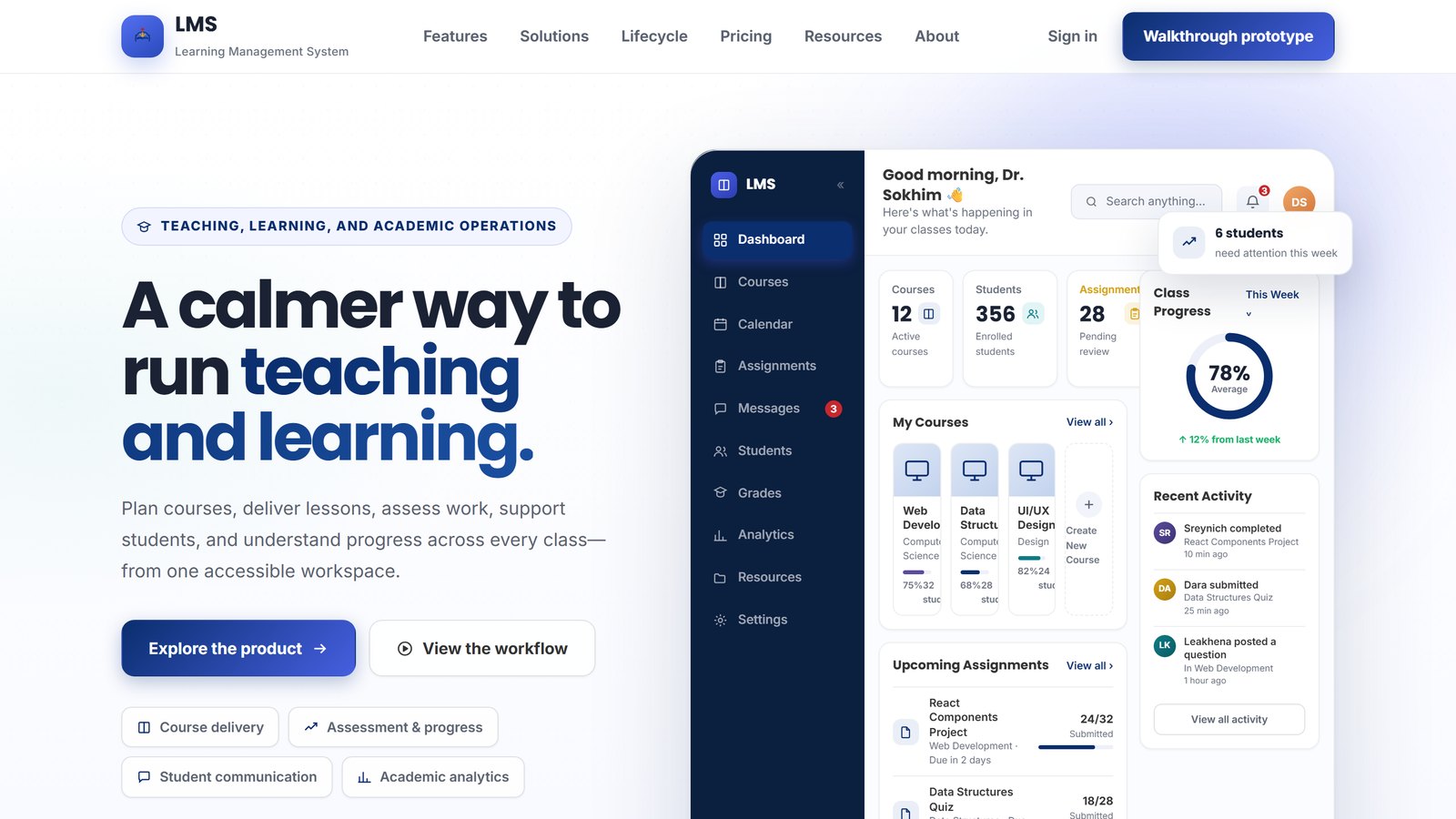
A bilingual (English/Khmer) learning management system for course delivery, assessment, communication, and academic analytics.
The internship search is my active priority — software engineering roles: full-stack, backend, or data and ML tooling.
Growing CHNAI LAB — most of my work there is with one teammate, on product direction and the standards our products are held to.
Published the Kaskor ASR fine-tuning pipeline and the Chomkar Decision Grid engine as public MIT-licensed repositories.
Preparing the next validation step for Chomkar OrderLoop: one recurring buyer pilot with documented commitments.
Code owns calculations, invariants, and permissions. AI helps research, explain, draft, and review — it does not invent the numbers.
Every important claim on this site carries a label: repository evidence, public evidence, owner confirmed, demo, planned, or private. Released, prototyped, and planned work are different claims.
I work across ai & machine learning, software & product systems, business & strategy, and governance & commercial rules — why these connect. The full process and AI policy live on the colophon.
I am a student looking for internships, research opportunities, and product work where the technical side meets business and governance questions. If that sounds useful, I would be glad to hear from you.